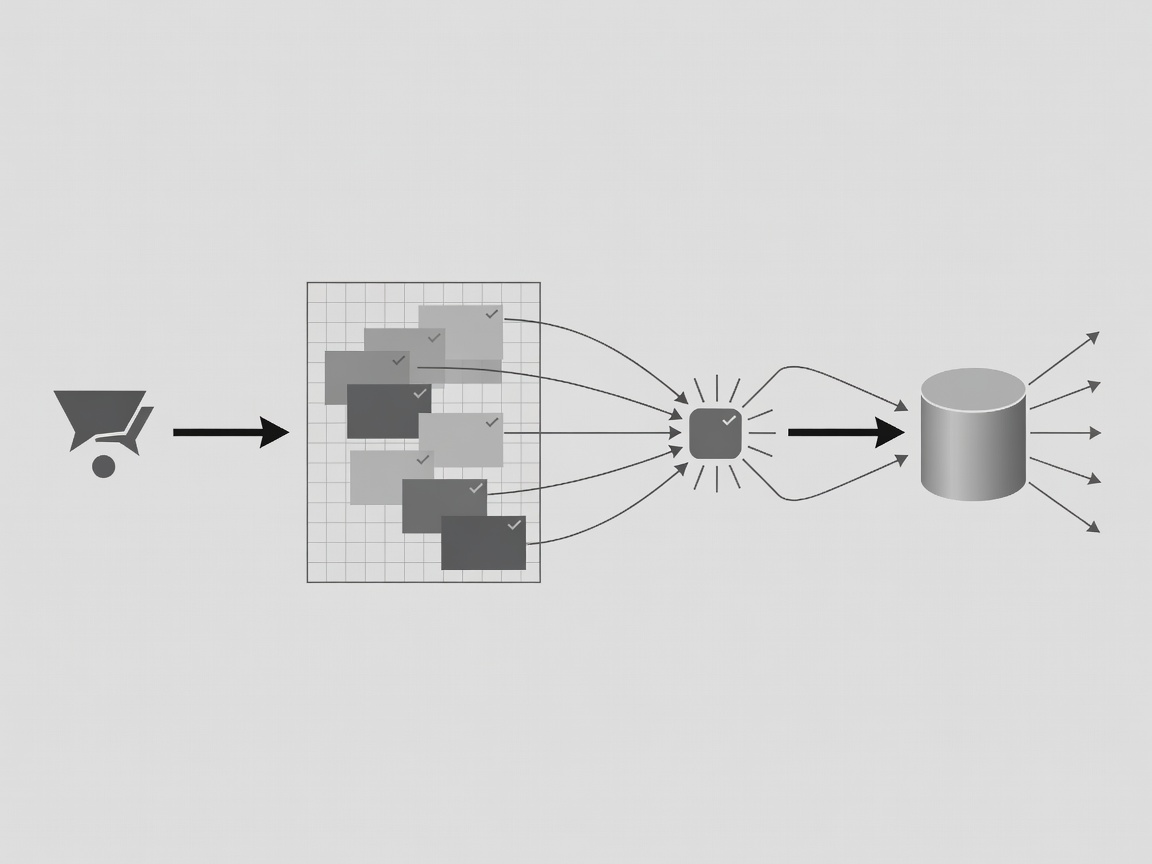
1. Select an authoritative collection
Start with documents that have an owner and a clear purpose: approved policies, product instructions, internal procedures or service documentation. A collection of unrelated uploads is not automatically a useful knowledge base. Identify which document takes precedence when two sources disagree and which material should be excluded because it is obsolete, incomplete or restricted.
Record source location, title, revision information and access permissions. A retrieved passage needs enough context to remain meaningful outside its original page. Tables, headings and footnotes may change the interpretation of a sentence. Preserve those relationships where possible and provide a route back to the original document so a reader can inspect the surrounding material.
2. Understand retrieval-augmented generation
Retrieval-augmented generation, or RAG, combines document retrieval with generated answers. The system searches a collection, supplies relevant passages to a model and asks it to respond using that evidence. It does not guarantee correctness, and it is not the same as training a model to memorise the organisation’s documents. Retrieved evidence can be missing or misinterpreted.
Document chunking divides material into smaller passages for retrieval. An embedding represents text as numerical values used to compare meaning. Both choices affect which evidence reaches the model. Short passages may omit a necessary qualification; long passages may include unrelated material. Evaluate these choices with your actual questions rather than adopting a fixed passage size as a universal rule.
3. Compare keyword and semantic search
Keyword search can be useful for exact identifiers, product codes and specialist phrases. Semantic search compares meaning and can help when the question uses different wording from the document. Hybrid search combines these approaches. The right balance depends on the collection: exact contract references and loosely worded support questions present different retrieval problems.
Search infrastructure such as PostgreSQL with pgvector, OpenSearch or a managed search service can support different implementation choices. Compare permission filtering, indexing operations, backup arrangements and the skills needed to maintain the system. Do not choose a separate database merely because the project involves AI. Existing infrastructure may be suitable if it meets the retrieval and access requirements.
4. Apply permissions before retrieval
An assistant should not expose a document to someone who could not access it directly. Filter retrieval using the user’s identity and relevant access rules before passages enter the model’s context. Hiding a citation afterwards does not undo a disclosure. Treat document titles, snippets and generated summaries as information that may itself be sensitive.
Keep conversations separated where users or teams have different permissions. Define whether chat histories are retained and who may inspect them. A document can also contain malicious instructions, so retrieved text must be treated as evidence rather than as authority to change system behaviour. An answer-only assistant need not have tools that send messages or modify records.
5. Make uncertainty visible
Require answers to point to the source passages that support them. A citation is useful only if the passage actually supports the claim; a link alone is not proof. If evidence is missing or contradictory, the assistant should explain that limitation and direct the question to an appropriate owner rather than filling the gap with a plausible response.
Evaluate routine questions, ambiguous requests, inaccessible material and questions outside the collection. Inspect retrieval and answer generation separately: a correct passage can still produce an incorrect summary. Include questions where the expected result is no answer. For legal, financial or health-related material, keep the assistant within information retrieval and require suitable professional review where advice is needed.
6. Maintain the collection and service
Agree how additions, revisions and deletions reach the index. Removing a source should also remove its searchable copies and cached content where applicable. Record who approves document changes, handles reported errors and checks whether answers remain appropriate after a policy revision. A launch without a content owner leaves the system’s reliability dependent on chance.
For technical background, consult PostgreSQL documentation, the pgvector project documentation and OpenSearch documentation. For an enquiry, describe the collection, its permissions, the intended users and the kinds of question it should answer. Share sensitive documents only after the handling arrangements have been agreed.