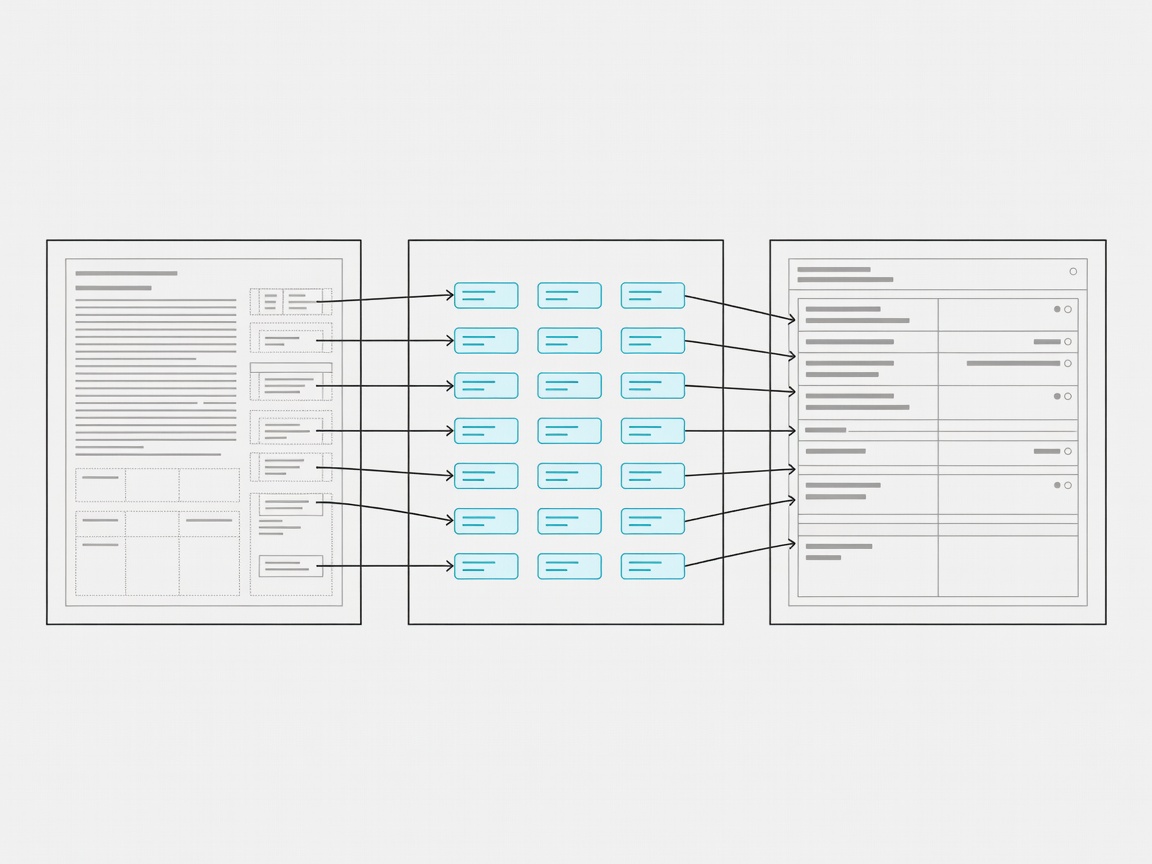
1. Separate text capture from interpretation
Optical character recognition, or OCR, converts images of text into machine-readable text. It does not by itself decide whether a number is an invoice total, a purchase order reference or an account identifier. Born-digital PDFs may already contain extractable text, although their reading order and tables can still require careful handling.
Inspect the document types before selecting a pipeline. A consistent supplier form differs from a scanned letter with handwritten notes. Page rotation, faint printing and overlapping stamps can affect capture. Preserve the original file and page references so the review process can compare an extracted value with the visible evidence rather than trusting a detached string.
2. Define the output schema
A schema describes the fields, types and relationships the destination expects. For an invoice, this may include supplier identity, invoice reference, issue date, currency, line items and totals. Mark required and optional fields explicitly. A missing field should remain missing or enter review; it should not be replaced by a model’s plausible guess.
Keep identifiers as text when leading zeroes or punctuation matter. Preserve the original date string alongside a normalised value when the source is ambiguous. UK day-month conventions help with interpretation, but an international document may follow another convention. Currency symbols can also be ambiguous. Resolve these issues through evidence or review rather than a hidden assumption.
3. Choose the extraction approach
Templates can work well when layout and field positions are stable. OCR combined with rules offers transparent checks for predictable formats. Document models and language models can interpret more varied layouts, but require evaluation and constraints. The most suitable pipeline may combine these approaches rather than asking one model to perform every operation.
Tesseract, Azure AI Document Intelligence and Amazon Textract provide different routes to text and document extraction. Compare deployment location, data handling, supported document structures and the ability to retain field locations. Consult each provider’s documentation for the exact capabilities and terms relevant to your project. A feature description is not evidence that it will handle your collection satisfactorily.
4. Validate relationships, not just formatting
A valid-looking invoice reference may belong to the wrong document. Check relationships between the supplier, purchase order, line items and totals where the necessary records are available. Use deterministic code for arithmetic. Treat a bank-detail change or unmatched supplier as an exception requiring the organisation’s established approval process, not an opportunity for automatic correction.
Duplicate detection should use more than a file name. The same document can arrive as a new scan or attachment. Compare relevant identifiers and maintain a record of completed processing. Keep extracted content separate from instructions: text inside a document must not be allowed to tell the pipeline to bypass validation, alter permissions or send data elsewhere.
5. Design the reviewer’s workspace
Show the original page alongside the proposed values, with the relevant region highlighted where possible. Make it clear which checks failed and which fields need attention. A confidence score from a model is not a guarantee of accuracy and should not become an unquestioned approval rule. Establish routing decisions using evaluated behaviour and the consequence of an error.
Assess performance at field level as well as document level. Include unusual layouts, multi-page records, poor scans and documents outside the intended scope. Inspect line-item associations, not only header fields. Track correction effort and repeat errors so that changes to the extraction process address real causes rather than merely making the output appear more complete.
6. Agree storage and downstream actions
Extracted records, original files and review logs may contain personal or confidential information. Define access, retention, deletion and the location of processing before sending files to a service. Keep a staged record separate from the final system update. Acceptance of an extracted invoice should not be confused with authorisation to pay it.
For preparation, review Tesseract documentation, Azure AI Document Intelligence documentation and Amazon Textract documentation. An initial enquiry should describe file formats, document families, required fields and the destination system. Use redacted examples until a suitable data handling arrangement is in place.