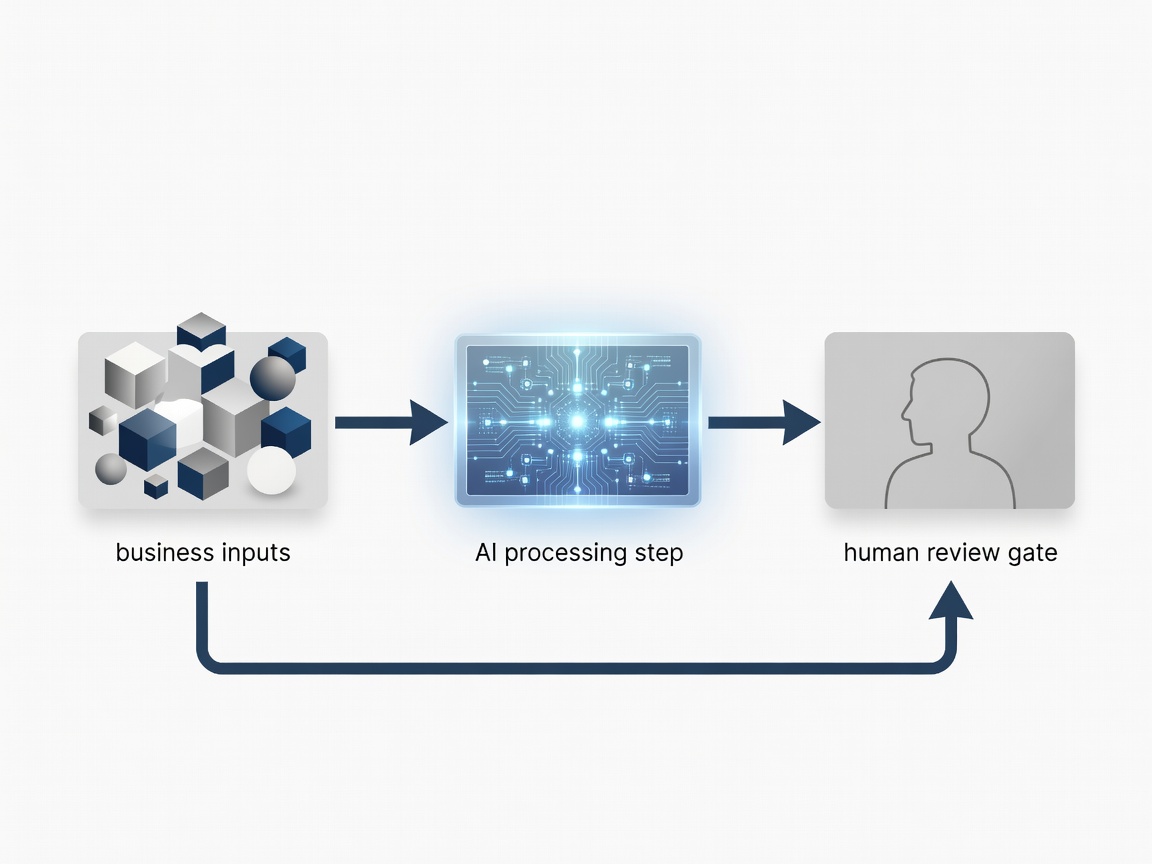
AI services for UK organisations: plan a suitable use, connect a workflow, organise knowledge, process documents and set the controls that keep people accountable.
Define the input, limit the action, review the output.
01
Choose the work before the tool.
Each service starts with a practical question. Read what the work involves, which decisions need your input and where a simpler approach may be more suitable.
InputBusiness process
OutputScoped proposal
DecisionProceed or stop
01
AI strategy and scoping
Compare rules, search and generative AI against a specific task. Define data access, an evaluation set and acceptance conditions before committing to implementation.
Connect APIs, queues and existing systems. Separate predictable rules from AI interpretation, handle retries and keep consequential actions behind explicit approval.
Use retrieval-augmented generation to answer questions from a controlled document collection. Compare keyword and semantic search, preserve permissions and make unsupported answers recognisable.
Extract text and fields from invoices, purchase orders and correspondence. Distinguish optical character recognition from interpretation, validate relationships and route uncertain records for review.
Set data handling, evaluation, human oversight and incident procedures. Use the ICO’s AI guidance and the NIST AI Risk Management Framework as reference points, not as substitutes for your obligations.
Start with the work that needs attention: what arrives, who handles it, which system holds the result and what happens when the result is wrong. That description makes a useful first enquiry.
Describe one repeatable task and its present hand-offs.
Identify the data owner and the person who approves changes.
Explain the outcome you want and the failure you cannot accept.
A written scope should state deliverables, exclusions, dependencies and acceptance conditions. Any fees and schedule belong in an agreed proposal, not an assumption about what AI can achieve.
We use cookiesEssential cookies keep this site working. Optional ones help us see what is useful. You can change your choice at any time. Cookie policy